



If you work with electric vehicles (EVs) in any capacity, you may have noticed a change recently to the way charging infrastructure is described and reported. In March 2026, Zapmap – which works closely with the Department for Transport (DfT) to provide the official data underpinning UK charging statistics – introduced updated reporting standards that bring new terminology and a new way of counting the network. It’s worth knowing about.
The short answer is clarity and consistency. Zapmap explains that the shift is about making charging easier to understand for new and prospective EV drivers, and aligning the UK more closely with how infrastructure is measured across Europe and internationally.
The changes also reflect how much better charging data has become. The widespread adoption of Open Charge Point Interface (OCPI) means we can now track individual chargers far more accurately than before.
There are two main updates to be aware of:
The image below shows how these terms relate to the wider infrastructure hierarchy – from charger through to device, location, and network.
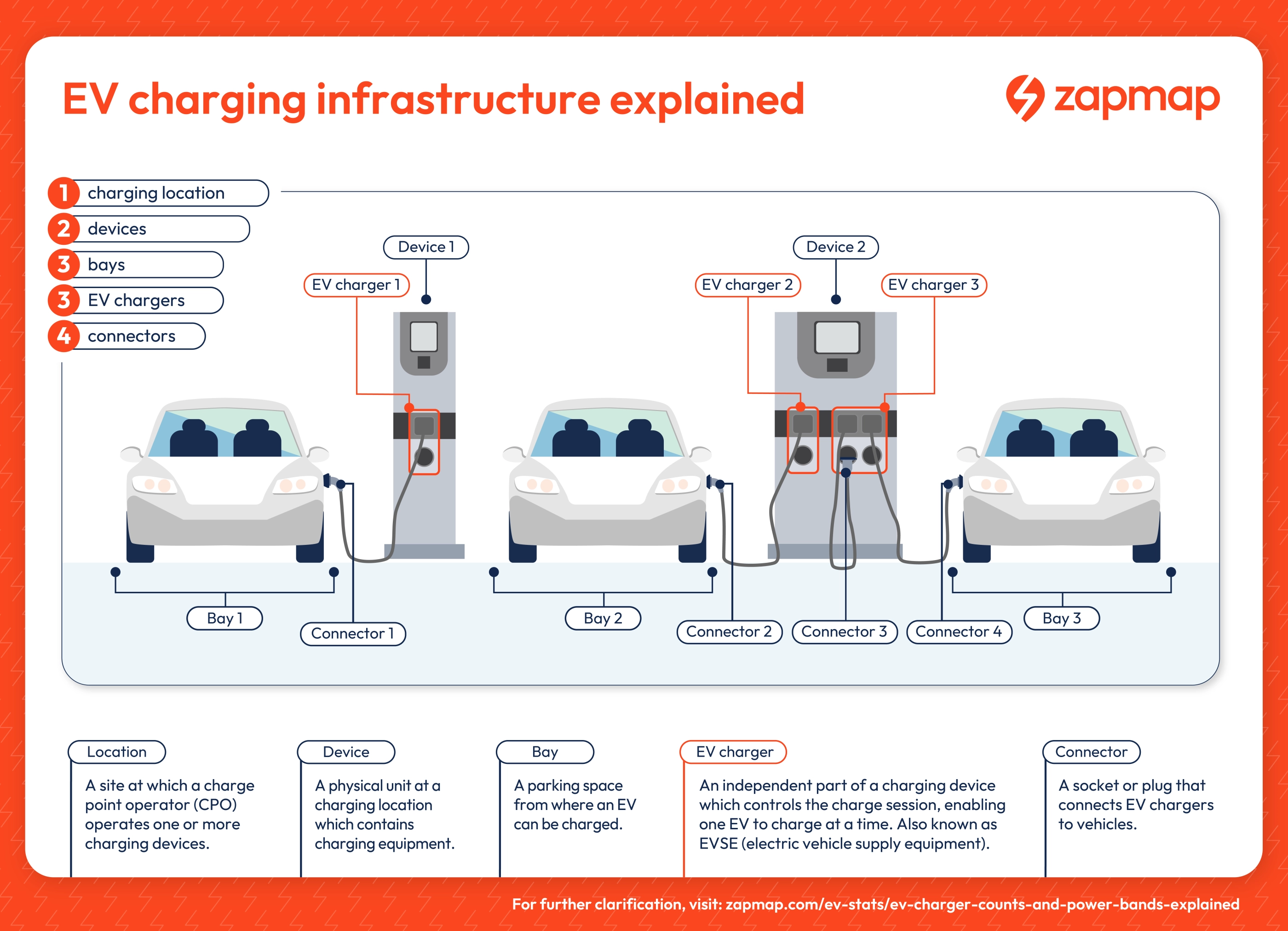
If you produce content, reports, data sheets or customer communications that reference charging speeds or network size, now is a good time to audit your terminology. You can check for references to ‘slow’ or ‘fast’ chargers and update them accordingly, but this is also a good time to audit your wider content library to make sure the rest of your material is still accurate and relevant.
If you’re unsure how the changes affect your specific outputs – or how to make them – it’s worth seeking advice. Keeping pace with industry terminology sounds like a small thing, but it can be hard to achieve accurately and consistently. Yet it matters. Using outdated language in client-facing communications can undermine credibility, especially in a sector evolving as fast as EVs.
At Resonates, staying on top of industry changes is just part of what we do. We work with clients across energy, technology and infrastructure, and we’re genuinely interested in the sectors we write for. That means we spot updates like this Zapmap guidance and help clients to adjust their approach.
Sometimes it’s reactive – we catch the use of a term that’s been superseded. And sometimes it’s proactive – we’ll suggest a clearer, more current way of framing something before a client has even noticed the issue.
The right words, used consistently and accurately, are a signal to your audience that you know your field. We help make sure that signal is always a strong one.